The information on this website is general in nature and does not take into account your objectives, financial situation, or needs. Consider seeking personal advice from a licensed adviser before acting on any information.
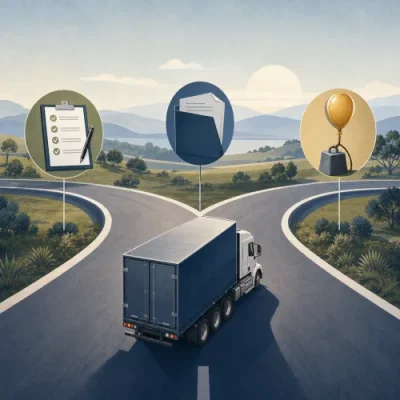
Truck loan refinancing may help some Australian businesses adjust repayments, manage a balloon payment, replace a truck or respond to changing cash flow. This guide explains when refinancing may be worth reviewing, what costs to check first, and how the process usually works.
Refinancing a truck loan in Australia means replacing an existing truck finance agreement with a new one, either with the same lender or a different lender. A business might consider it when interest rates, cash flow, contract terms, vehicle use or a balloon payment no longer suit its circumstances.
Refinancing is not automatically cheaper or better. Break costs, exit fees, new establishment fees, security requirements and tax consequences can affect the overall result. Before applying, it is worth checking the current loan contract, the truck’s value, the remaining debt and the business’s capacity to service a new facility.
When might a business consider truck loan refinancing?
Truck loan refinancing is usually considered after the original finance has been in place for some time and the borrower wants to change the structure, lender or repayment profile. Common reasons include:
- Cash flow pressure: Repayments that once suited the business may become harder to manage if revenue changes, fuel costs rise, maintenance costs increase or seasonal work slows.
- A balloon or residual payment is approaching: A business may need to decide whether to pay the balloon, sell or trade the truck, or refinance the balloon into a new arrangement.
- Interest rate changes: Market rates, lender pricing or the borrower’s credit profile may have changed since the original loan was taken out.
- Business growth: A growing operator may want to restructure finance across one truck or a broader fleet to align repayments with current operations.
- Vehicle replacement or upgrade: Refinancing may be reviewed when the existing truck no longer meets payload, route, emissions, reliability or contract requirements.
- Change in business structure: Moving from sole trader to company, adding partners or changing ABN arrangements may prompt a finance review.
- Unhelpful loan features: Some borrowers look to refinance if their current agreement has limited flexibility, unsuitable repayment frequency or restrictions that no longer suit.
These triggers do not mean refinancing will be suitable. They simply indicate that the current finance arrangement may be worth reviewing against the business’s present needs.
What to check before refinancing a truck loan in Australia
Before approaching lenders, start by understanding the existing loan. The key question is not only “Can I get a different repayment?” but “Will the new arrangement improve the overall position after all costs, risks and obligations are considered?”
1. The payout figure
Ask the current lender for a written payout figure. This is the amount required to finalise the existing finance on a specific date. It may include the outstanding principal, accrued interest, fees and any applicable break or early termination costs.
Payout figures can change with time, particularly if interest accrues daily or a repayment is due. If settlement is delayed, the figure may need to be refreshed.
2. Truck finance break costs and exit fees
Some truck finance agreements include costs for paying out the loan early, especially where the facility has a fixed rate or a set term. The contract may also include discharge, administration or documentation fees.
Break costs can vary depending on the lender, product, contract terms and timing. Review the loan agreement carefully and ask the lender to explain any charges in writing. If you are unsure about the legal or financial effect of a clause, consider getting professional advice before committing to a refinance.
3. The truck’s current value and equity position
Lenders may assess the truck’s age, condition, kilometres, service history, configuration and resale value. If the payout figure is higher than the truck’s current value, the business may have negative equity. This can make refinancing more difficult or increase the amount that needs to be contributed upfront.
If the truck has retained value well and the debt has reduced, there may be usable equity. However, lender treatment of equity depends on the lender’s criteria and the overall application.
4. The remaining term and total cost
A lower monthly repayment can be attractive, but it may be achieved by extending the loan term. A longer term can reduce short-term cash flow pressure but may increase the total interest paid over time.
Use repayment estimates carefully. They should be treated as modelling tools, not approval or pricing guarantees. You can use a truck loan calculator to compare how changes in loan amount, term, repayment frequency and balloon structure may affect estimated repayments.
5. Balloon payment or residual amount
A balloon payment can reduce regular repayments during the term, but it creates a larger amount to manage at the end. If you are considering balloon payment refinance, check:
- whether the truck is still worth enough to support refinancing;
- whether the business can service the new repayments;
- whether extending debt on an ageing truck makes commercial sense;
- what happens if the truck needs major repairs during the next term; and
- whether selling, trading or paying the balloon from cash reserves is a better option.
6. Security, PPSR and ownership issues
Truck finance is often secured by the vehicle. When refinancing, the new lender may need to pay out the old lender and register its own security interest. The existing security interest may need to be discharged once the old loan is finalised.
Errors in settlement, vehicle identification details or security releases can create practical problems. Confirm the VIN or chassis details, registration information and settlement process before proceeding.
How the commercial truck refinance process usually works
The process can vary between lenders and brokers, but truck loan refinancing often follows these general steps:
- Review the current contract: Check the outstanding balance, interest rate, repayment schedule, balloon amount, fees and early payout conditions.
- Request a payout figure: Ask the current lender for the amount needed to finalise the loan on a nominated date.
- Estimate the truck’s value: Consider market value, condition, kilometres, service records and whether a formal valuation may be needed.
- Compare refinance options: Review interest rate type, fees, loan term, repayment frequency, balloon structure and flexibility, not just the headline repayment.
- Prepare documents: Lenders may request business financials, BAS, tax returns, bank statements, identification, ABN details, existing loan statements, registration details and insurance information.
- Submit the application: The lender assesses the business, borrower, truck and proposed loan structure according to its own criteria.
- Settle the refinance: If approved and accepted, the new facility pays out the existing lender and the new agreement begins.
If you want help comparing refinancing pathways, the site’s broker information page explains how brokers may assist with lender discussions and finance options. Broker involvement does not guarantee approval or a particular rate, and any outcome depends on the borrower’s circumstances and lender criteria.
Truck Loans Australia Weekly News Insights
 This week: industry urges a temporary suspension of the road user charge to relieve fuel pressures; the Northern Territory freezes heavy-vehicle registration fees for 12 months; October truck sales remain steady per TIC data; and NHVR issues a prohibition notice after serious fleet defects. Why it matters: plan for fuel volatility, model NT rego savings, move early on purchases with pre-approval, and factor compliance into total cost of ownership. Visit truck-loans.com.au for guides and calculators.
Costs to compare before signing a refinance offer
When assessing a refinance offer, look beyond the new repayment amount. A refinance may involve several costs that affect the total benefit.
| Cost or factor |
Why it matters |
| Current loan payout |
Shows how much must be repaid to close the existing agreement. |
| Break costs or early payout fees |
Can reduce or remove the benefit of refinancing, especially on fixed-rate facilities. |
| New establishment or documentation fees |
Adds to the cost of setting up the new loan. |
| Valuation or inspection costs |
May apply if the lender needs to verify the truck’s condition or value. |
| Registration or security-related costs |
May arise when security interests are changed or new documents are prepared. |
| Interest over the full term |
A lower repayment may still cost more overall if the term is extended. |
| Balloon or residual amount |
Affects both current repayments and the future amount due at the end of the term. |
For more detail on contract terms that can affect exit costs and refinance flexibility, see the guide to what to look out for in truck loan contracts.
Refinancing to manage a balloon payment
Balloon payment refinance is a common reason to revisit truck finance. If a balloon is due, the business may have several possible pathways, depending on the lender, truck value and financial position:
- pay the balloon from business cash reserves;
- sell the truck and use the proceeds to clear the amount owing;
- trade the truck and arrange new finance for a replacement vehicle;
- refinance the balloon into a new loan; or
- combine the balloon with a broader finance restructure.
Refinancing a balloon can spread the amount over time, but it also means keeping debt attached to the vehicle for longer. This can be risky if the truck is ageing, maintenance costs are rising or the vehicle is critical to contracts that may not continue.
What lenders may assess in a truck refinance application
A refinance application is not assessed only on whether the business has made past repayments. Lenders may consider:
- the borrower’s credit history and existing liabilities;
- business trading history and cash flow;
- recent financial statements, tax returns, BAS or bank statements;
- the truck’s age, value, condition and suitability as security;
- the purpose of the refinance;
- repayment history on the current facility;
- whether the proposed term is reasonable for the truck’s remaining useful life; and
- insurance arrangements for the vehicle.
Requirements vary between lenders. Some may be more comfortable with newer trucks, stronger financials or lower loan-to-value ratios. Others may consider applications with more complex circumstances but price the risk differently.
Tax and accounting considerations
Truck loan refinancing can have tax and accounting implications, particularly for business borrowers. The treatment may depend on the finance structure, business use of the truck, GST registration, depreciation claims, interest deductibility and whether any fees are capital or deductible expenses.
Do not assume a refinance will create a tax advantage. Speak with a registered tax agent or accountant before restructuring finance, especially if the truck is used partly for private purposes, the ownership structure is changing or a balloon payment is involved. The related guide to tax, GST and depreciation considerations for business truck finance may help you prepare questions for your adviser.
Risks and trade-offs to consider
Refinancing can be useful in some situations, but it can also create new risks. Consider the following before signing:
- Extending the debt too long: A longer loan term may not suit an older truck with increasing maintenance needs.
- Focusing only on repayment size: The total cost may increase even if the regular repayment decreases.
- Ignoring downtime risk: If the truck is essential to income, reliability and insurance may matter as much as finance cost.
- Rolling fees into the new loan: Capitalising costs may reduce upfront cash outlay but increases the amount financed.
- Overlooking contract restrictions: The existing agreement may contain conditions that affect early exit, sale or refinance.
- Changing lenders without comparing service and flexibility: Rate and repayment are important, but support, communication and settlement accuracy also matter.
Questions to ask before refinancing truck finance
Before deciding whether to refinance truck finance, ask:
- What is the current payout figure, and how long is it valid?
- Are there break costs, early termination fees or discharge fees?
- What is the truck realistically worth today?
- Will the new loan reduce total cost, improve cash flow, or both?
- Am I extending debt on a truck that may soon need replacement?
- What happens at the end of the new term?
- Is there a balloon payment, and how will it be managed?
- What documents and financial information will the lender require?
- Are there tax, GST or depreciation consequences?
- Does the new structure still suit the business if revenue changes?
Final Thoughts
A business might consider refinancing a truck loan when its current finance no longer fits its cash flow, vehicle needs, balloon payment position or broader business plans. The first checks should be the payout figure, break costs, truck value, remaining term, total cost and lender requirements.
Refinancing should be assessed as a whole-of-business decision, not simply a search for a lower repayment. The right outcome depends on the business’s financial position, the truck, the existing contract and the terms available from lenders at the time.
If you are still comparing broader finance options, the Truck Loans Australia homepage provides a starting point for general truck loan information.
Published: Wednesday, 11th Nov 2026
Author: Paige Estritori




No comments yet. Be the first to share your thoughts.