The information on this website is general in nature and does not take into account your objectives, financial situation, or needs. Consider seeking personal advice from a licensed adviser before acting on any information.
Financing a business truck can affect cash flow, tax deductions, GST credits and depreciation claims. This guide explains key Australian concepts to discuss with your accountant before choosing a truck finance structure.
When you finance a truck for business use, the loan repayment is only one part of the total cost picture. Australian businesses also need to think about tax deductions, GST treatment, depreciation, business-use records and how the finance structure is documented.
This article provides general educational information for small business owners, sole traders and fleet operators considering business truck finance in Australia. It is not tax, financial or legal advice. Tax outcomes depend on your business structure, GST registration, finance contract, vehicle use and Australian Taxation Office requirements. Before signing a finance agreement or lodging a tax return, consider speaking with a registered tax agent or accountant.
Why tax treatment matters when financing a truck
A truck can be a major business asset. The way you acquire it may affect when and how you can claim deductions, whether you can claim GST credits, and what records you need to keep.
For example, a business may focus on whether the monthly repayment is affordable, but the tax result may not match the repayment amount. In many finance arrangements, the principal part of a repayment is not generally claimed as a deduction in the same way as interest or operating expenses. Instead, the business may claim depreciation for the decline in value of the truck over time, subject to the applicable rules.
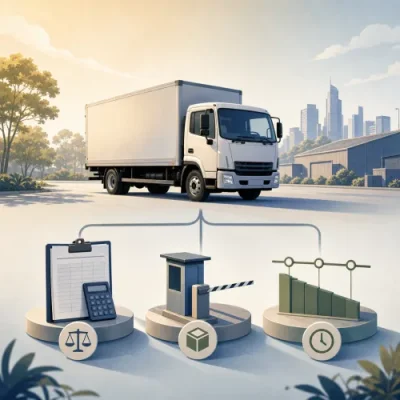
That means it is useful to look at three separate questions:
- Cash flow: what repayments, deposits, balloon payments, insurance, registration, maintenance and fuel costs need to be funded?
- GST: is the business registered for GST, and is there a valid tax invoice or taxable supply that supports an input tax credit claim?
- Income tax: what deductions may be available for interest, depreciation, lease payments, running costs and other business expenses?
Common truck finance structures and why they can affect tax
Different truck financing options can have different accounting and tax consequences. The name used in marketing material is not always enough; the actual contract terms matter.
| Finance structure | Typical commercial purpose | Tax and GST points to discuss |
|---|
| Secured business truck loan or chattel mortgage | The business finances the purchase of a truck and the vehicle is commonly used as security. | The business may be treated as acquiring the truck, which can raise questions about GST on the purchase, interest deductibility and depreciation. |
| Hire purchase or asset finance agreement | The business pays for the use and eventual ownership of the truck under contract terms. | Tax treatment can depend on the agreement. Ask whether the business is treated as owner for depreciation and how GST is handled. |
| Finance lease or commercial lease | The business uses the truck over a set term, sometimes with residual value arrangements. | Lease payments, GST timing and residual obligations should be reviewed carefully with an accountant. |
| Operating lease or rental-style arrangement | The business uses the truck without necessarily intending to own it. | Deductions may be linked to lease or rental payments, but contract terms, business use and GST documentation still matter. |
If you are comparing leasing and buying from a broader business perspective, you may also find it useful to read The Pros and Cons of Leasing vs. Buying a Truck for Your Business.
GST on truck finance: key concepts for Australian businesses
GST can be an important part of the upfront cost of a truck. Whether your business can claim GST credits depends on factors including GST registration, business use and the type of supply made to your business.
GST registration and creditable purpose
A business generally needs to be registered for GST to claim input tax credits. The truck must also be acquired for a creditable purpose, meaning it is used in carrying on the business rather than for private use. If there is mixed business and private use, the GST claim may need to be apportioned.
GST on the truck purchase versus GST on finance payments
With some finance structures, GST may be connected to the acquisition of the truck itself. With other arrangements, GST may be included in lease or rental payments over time. Some finance charges may have different GST treatment from the truck purchase price or lease payment.
Because the timing can affect cash flow and business activity statement reporting, it is worth confirming the expected GST treatment before settlement. Ask for clear documentation, including a tax invoice where required.
GST and second-hand trucks
Many businesses finance used trucks. GST treatment for a used truck can depend on who is selling it, whether the seller is registered for GST, and how the sale is documented. A private sale may not have the same GST treatment as a taxable sale from a registered business or dealer.
Before relying on a GST credit, check whether the supplier has issued the correct documentation and whether the transaction supports the claim.
Income tax deductions for business truck finance
For Australian businesses, truck-related deductions usually depend on the business purpose, the finance structure and whether the expense is capital, financing-related or operating in nature.
Interest on business truck loans
Where a truck loan is used for business purposes, the interest component may generally be deductible to the extent the truck is used in the business. If the truck is partly used privately, the deductible amount may need to be reduced.
It is important to separate principal and interest. Repaying borrowed money is not the same as paying interest. Your accountant can help identify which parts of the repayment schedule are relevant for tax purposes.
Loan fees, establishment costs and other charges
Finance contracts may include establishment fees, documentation fees, monthly account fees, early payout costs or other charges. Some may be deductible immediately, while others may need to be spread over time or treated differently depending on their nature.
Do not assume every finance cost is claimed in the same way. Keep invoices and contract documents so your tax adviser can classify each amount correctly.
Lease or rental payments
If the truck is leased or rented, payments may be deductible to the extent they relate to business use, subject to the terms of the contract and tax rules. However, the labels used in the agreement, residual value obligations and ownership rights can all matter.
This is one reason tax review before signing can be helpful. Two contracts with similar monthly payments may produce different tax timing and accounting outcomes.
Depreciation for a commercial truck
Depreciation, sometimes referred to as decline in value, recognises that a truck used in a business generally loses value over time. If your business owns the truck, or is treated as owning it for tax purposes, depreciation may be relevant.
The amount and timing of a depreciation claim can depend on the vehicle, business structure, effective life, method used and any small business tax rules that may apply at the time. These rules can change, so avoid relying on outdated assumptions or general comments from another business owner.
Depreciation is not the same as loan repayment deductibility
A common misunderstanding is that a business can simply deduct the full truck loan repayment. In many cases, the tax picture is more nuanced. The business may claim interest as a financing cost and depreciation for the truck asset, rather than claiming the principal repayment itself.
This distinction matters when forecasting after-tax cash flow. A repayment calculator can help estimate the finance commitment before tax treatment is considered. You can use the site's truck loan calculator as a starting point, then speak with your accountant about how the repayments may interact with tax deductions and GST reporting.
Truck classification can matter
Commercial vehicles are not always treated the same way as passenger cars. Some tax rules distinguish between vehicles by design, payload and passenger capacity. A heavy rigid truck, prime mover, tipper, refrigerated truck or tray truck may raise different considerations from a dual-cab utility or light commercial vehicle.
If the vehicle could fall near a classification boundary, confirm the treatment before assuming which depreciation or deduction rules apply.
Business use, private use and apportionment
Tax deductions and GST credits are generally linked to business use. If a truck is used entirely for business, the treatment may be simpler. If there is private use, home-to-work travel, use by family members, or after-hours use by employees, apportionment and fringe benefits tax considerations may arise.
Examples of records that may help support business use include:
- trip records or work diaries;
- delivery schedules, invoices or job records;
- odometer readings;
- fuel and toll records;
- GPS or fleet management reports;
- maintenance and service records;
- policies showing permitted business and private use.
Sole traders should be particularly careful where the truck is used for both business and personal purposes. Fleet operators should also consider whether employee access creates additional reporting obligations.
Running costs and ownership expenses
Truck finance is only one part of the ongoing cost of operating a commercial vehicle. Depending on business use and documentation, other truck expenses may also be relevant for tax purposes.
These may include:
- fuel and AdBlue;
- servicing, repairs and maintenance;
- registration and permits;
- insurance premiums;
- tyres and parts;
- tolls and parking related to business use;
- tracking, compliance or fleet management systems;
- cleaning and safety equipment.
Some costs may be deductible as operating expenses, while others may be capital in nature and treated differently. For example, a major upgrade or modification may not be treated the same way as routine servicing.
Balloon payments, residual values and tax planning
Many truck finance contracts include a balloon payment or residual value at the end of the term. This can reduce regular repayments but leave a larger amount to pay, refinance or manage later.
From a tax perspective, a balloon or residual is not automatically a deduction simply because it is payable under the contract. Its treatment depends on the structure and circumstances. From a cash-flow perspective, it can be significant because the business needs a plan for the end of the loan or lease term.
Before agreeing to a balloon or residual, consider asking:
- Will the expected resale value of the truck support the residual amount?
- What happens if the truck is worth less than expected?
- Can the business afford the final payment if refinancing is not available?
- How does the structure affect depreciation, GST and interest deductions?
- Are there early payout, excess kilometre, condition or return obligations?
Records to keep for ATO truck expense substantiation
Good record keeping can make tax time easier and reduce the risk of unsupported claims. The ATO may require evidence that expenses were incurred, related to the business and were correctly apportioned.
Consider keeping:
- the finance contract and repayment schedule;
- purchase contract, invoice and tax invoice where applicable;
- proof of payment for deposits, repayments and fees;
- registration and insurance documents;
- service, repair and maintenance invoices;
- fuel, toll and operating expense receipts;
- business-use records and odometer readings;
- sale, trade-in or payout documents when the truck is disposed of;
- accountant workpapers or notes explaining tax treatment.
Cloud accounting software, fleet systems and digital receipt storage can help, but the records still need to be accurate and complete.
Questions to ask before choosing a truck finance structure
Before applying for business truck finance, it can be useful to discuss the following with your accountant, bookkeeper or tax adviser:
- Is the business registered for GST, and can it claim input tax credits on this transaction?
- Will the truck be used fully for business, or will private use need to be apportioned?
- Who should purchase or finance the truck: the sole trader, company, trust or partnership?
- Will the business be treated as owning the truck for depreciation purposes?
- How will interest, fees, lease payments or other finance costs be treated?
- Are there any fringe benefits tax implications if employees use the truck privately?
- How will a balloon payment or residual value affect cash flow and tax treatment?
- What documents will the lender require, and do they match the business records?
- How will the truck be treated if it is sold, traded in, written off or refinanced?
For finance documentation and lender comparison questions, it may also be useful to speak with a commercial finance professional. Any lender or broker assessment will depend on your business circumstances, credit profile, vehicle details and provider criteria.
Tax benefits should not be the only reason to finance a truck
Tax deductions and GST credits can reduce the after-tax cost of a business truck, but they do not remove the need to repay the finance or operate the vehicle profitably. A deduction is not the same as a refund of the full cost, and tax timing may not align with repayment timing.
When assessing a truck purchase, consider the full commercial picture:
- whether the truck will generate enough revenue or productivity benefit;
- whether repayments remain manageable during quiet periods;
- the impact of maintenance, downtime and insurance costs;
- the expected useful life and resale value of the truck;
- the risk of relying on tax assumptions that may not apply to your business.
A well-structured truck finance decision should account for both pre-tax cash flow and after-tax outcomes. The best starting point is to compare the finance commitment, understand the contract, and get tax advice before making assumptions about deductions, GST credits or depreciation.
Published: Wednesday, 5th Aug 2026
Author: Paige Estritori



No comments yet. Be the first to share your thoughts.