Truck Loans Australia Truck Lease Finance Repayment Calculator
Estimate truck lease repayments with our Truck Lease Calculator. Factor in residual (balloon) payments to compare finance options and plan the best solution for your business.
Calculator results are estimates based on inputs and assumptions and are provided for general information only. They are not quotes, offers, approvals, eligibility decisions or personalised recommendations, and do not indicate that a lender will provide credit. Actual repayments and costs may differ.
Truck Lease Details:
Important!
Truck Lease Interest Rates differ from lender to lender and will depend on your individual circumstances (credit history, employment status, age, etc.).
Truck Lease Amortisation Calculator
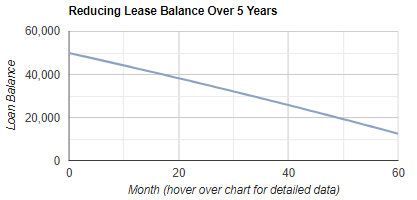
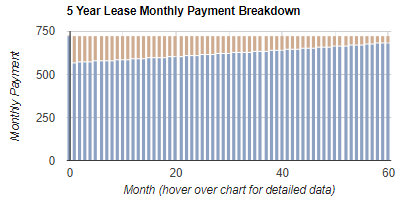
The following amortisation graphs detail month-by-month data on the progress of the proposed loan. The first chart below examines the reducing loan balance over the course of the finance contract term. The second graph illustrates the portion of each monthly repayment allocated to payment of interest vs principal reduction.
How to use our Truck Lease Finance Repayment Calculator
Our Truck Lease Finance Repayment Calculator helps Australian businesses estimate truck lease repayments before speaking with a lender. By modelling purchase price, interest rate, term and a residual or balloon payment, you can compare options, stress-test cash flow, and choose a structure that suits your operational needs and end-of-term plans (keep, refinance, trade, or pay out).
Why it matters: Truck lease repayments can look affordable while still carrying a large end payment. Adding a residual or balloon value may reduce monthly repayments, but it can increase total interest and leave a sizeable amount due at the end of the term. The calculator makes that trade-off clear.
How to complete the form for the best result
1. Purchase Price: Enter the truck’s purchase price as a whole number (no decimals, commas or symbols). Where relevant, consider whether you want to include on-road and other costs such as stamp duty, registration, insurance and tax-related amounts in your finance estimate (only include costs you expect to fund).
2. Balloon or Residual Value: Choose the residual as a percentage of the purchase price. A higher percentage generally lowers ongoing repayments but increases what you will owe at the end of the lease. Select a level that matches your expected end-of-term strategy and business cash reserves.
3. Term of Loan: Select the number of years you want to repay over. Longer terms typically reduce periodic repayments but can increase the total cost over time.
4. Interest Rate: Select an annual interest rate for the simulation. The listed rates are indicative only; your actual rate may differ based on lender policy and your circumstances. .
5. Calculate: Click calculate to generate the estimate and charts.
How to interpret the results
Review the estimated repayment amount alongside the amortisation charts showing the reducing balance over time and the split between interest and principal across the term. Use these outputs to compare scenarios, for example changing residual percentage or term, and to plan for the end-of-term residual payment.
ASIC compliance and important notes: This calculator provides general information and estimates only. It does not consider your objectives, financial situation or needs and is not financial or credit advice. Results may exclude fees, lender charges, taxes and timing assumptions. Consider seeking professional advice and obtaining a formal quote before making a decision.
Commercial truck finance can help Australian businesses spread the cost of buying or using a truck over time. This guide explains how commercial truck loans work, what to compare, which documents lenders may request, and how to think about repayments, running costs and loan management before committing to a finance contract. - read more
New businesses, sole traders and self-employed operators may be able to access truck finance in Australia, but lenders usually assess more than the truck itself. This guide explains the common eligibility factors, evidence and preparation steps that can affect a commercial truck loan application. - read more
As a trucking business owner in Australia, finding the right insurance is crucial to the protection of your business. To achieve this, it is important to first understand your specific business needs. Here are some factors to consider: - read more
Maintaining your truck is essential if you want to prolong its lifespan and save money down the road. Australian conditions can put a lot of strain on your vehicle, and neglecting its maintenance can lead to costly breakdowns and repairs. - read more
The commercial vehicle market in Australia is a cornerstone of the transportation and logistics industries, with trucks playing an indispensable role. Whether for long-haul deliveries across the vast distances of the continent or for urban distribution, trucks are critical assets for businesses and entrepreneurs alike. This significance makes it essential for commercial vehicle buyers to understand the dynamics of truck resale values in Australia. - read more
The Reserve Bank of Australia's decision on 29 September 2026 to lift the cash rate target by 25 basis points to 4.60 per cent has put loan affordability back in focus for households and small business operators already managing higher everyday costs. While the cash rate does not mechanically set every personal loan or short-term credit price, it influences funding costs, lender risk settings and the way borrowers think about repayment buffers. - read more
The Reserve Bank of Australia’s October 2026 Financial Stability Review gives borrowers a mixed but useful message: the financial system remains broadly resilient, yet cost pressures, hardship requests and sector-specific business stress are still important warning signs for households and SMEs planning their next finance decision. - read more
The Reserve Bank’s latest decision to keep the cash rate steady gives Australian boat buyers a useful moment to pause, but it should not be mistaken for a guarantee that borrowing costs will stay simple or uniform. For households looking at a first trailer boat, a fishing upgrade, a personal watercraft or a larger family cruiser, the lending market remains highly dependent on borrower profile, boat type, deposit size, loan structure and lender appetite. - read more
Financial hardship support is back in the spotlight across Australia’s lending market, with regulators and consumer advocates paying closer attention to how banks and non-bank lenders respond when borrowers ask for help. For households and small business owners already dealing with higher living costs, tax obligations, insurance premiums and uneven cash flow, this is more than a compliance story. It is a practical reminder that loan stress should be addressed before it becomes a missed-payment pattern. - read more
The Reserve Bank of Australia’s latest retail payments update offers another useful snapshot of how households are managing everyday spending, card use and short-term credit. While payment data is not the same as loan approval data, it can still tell borrowers something important: the way money moves through a household each month can affect how comfortable a lender feels about future repayments. - read more
Loan Amortisation Schedule: This is the formal name for the repayment schedule that shows each of your mortgage payments with a breakdown of how much is applied to principal and how much is applied to interest.