
Truck Loans Australia :: News
SHARE

Share this news item!

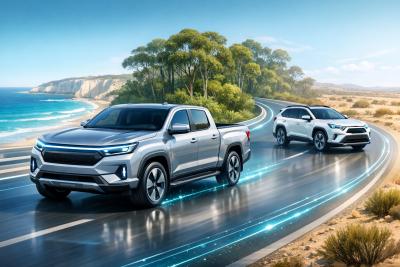
Toyota Expands Electric Lineup with Hilux BEV and RAV4 PHEV in Australia

New Electrified Models Strengthen Toyota's Commitment to Sustainable Mobility

Toyota Expands Electric Lineup with Hilux BEV and RAV4 PHEV in Australia?w=400

The information on this website is general in nature and does not take into account your objectives, financial situation, or needs. Consider seeking personal advice from a licensed adviser before acting on any information.

In May 2026, Toyota Australia expanded its electrified vehicle lineup by introducing the Hilux Battery Electric Vehicle (BEV) and the RAV4 Plug-in Hybrid Electric Vehicle (PHEV) to the local market.
These additions reflect Toyota's commitment to providing diverse low-carbon solutions that cater to the varying needs of Australian consumers.

The Hilux BEV marks Toyota's first-ever battery-electric light-commercial vehicle in Australia. Designed to meet the demands of both urban and rural users, the Hilux BEV combines the durability and reliability synonymous with the Hilux nameplate with the environmental benefits of electric propulsion. This model is expected to appeal to businesses and individuals seeking a robust vehicle with lower operating costs and reduced emissions.

Simultaneously, the RAV4 PHEV offers consumers a versatile option that blends the benefits of electric driving with the flexibility of a petrol engine. This plug-in hybrid variant of Australia's best-selling SUV provides an extended electric-only driving range, making it suitable for daily commutes and longer journeys alike. Deliveries for the RAV4 PHEV are set to commence in the third quarter of 2026.

Toyota's multi-pathway approach to decarbonisation is evident in these new offerings. By providing a range of electrified vehicles, including hybrids, plug-in hybrids, and battery-electric models, Toyota aims to meet the diverse preferences and requirements of Australian drivers. This strategy not only supports the transition to sustainable transportation but also ensures that consumers have access to vehicles that align with their lifestyles and driving habits.

As the automotive industry continues to evolve, Toyota's introduction of the Hilux BEV and RAV4 PHEV underscores the company's proactive stance in addressing environmental concerns and adapting to changing market dynamics. Prospective buyers are encouraged to explore these new models and consider how they fit into the broader context of sustainable mobility in Australia.

Published:Wednesday, 20th May 2026
Author: Paige Estritori

Please Note: We do not endorse any specific products or companies. Some content is sourced from third parties, including press releases, and may not be independently verified for accuracy or completeness.

Share this news item:

Rate this article

0 Comments

No comments yet. Be the first to share your thoughts.

Finance News

Surge in Mortgage Refinancing Reflects Australia's Competitive Home Loan Market
30 May 2026: Paige Estritori
In 2025, Australia experienced a significant surge in mortgage refinancing, with 640,137 home loans refinanced-a 20% increase compared to 2024. This trend underscores the intensifying competition within the home loan market, as borrowers actively seek better deals and more favourable terms. - read more
Non-Bank Lenders Gain Popularity Among Australian Mortgage Refinancers
30 May 2026: Paige Estritori
In February 2026, Australia's mortgage market witnessed a notable shift, with non-bank lenders experiencing a 44% year-on-year increase in refinancing customers. This trend indicates a growing preference among borrowers for alternative lending institutions offering competitive rates and flexible terms. - read more
Australian Borrowers Opt for Loan Upgrades to Secure Financial Certainty
30 May 2026: Paige Estritori
In March 2026, Australian mortgage holders demonstrated a preference for financial stability by increasingly opting to upgrade their existing loans with current lenders. Data from Equifax revealed a 12.6% year-on-year rise in such mortgage upgrades, nearly double the growth rate of refinancing to new lenders, which stood at 6.9%. - read more
Key Takeaways from the 2026-27 Australian Federal Budget
29 May 2026: Paige Estritori
The Australian Federal Budget for 2026-27, announced on 12 May 2026, introduces several significant changes that will impact the financial landscape for many Australians. Key highlights include: - read more
APRA's New Cap on High Debt-to-Income Home Loans Explained
29 May 2026: Paige Estritori
The Australian Prudential Regulation Authority (APRA) has announced a significant policy change aimed at mitigating risks in the housing market. Effective from 1 February 2026, APRA has introduced a cap limiting banks to issuing no more than 20% of new home loans to borrowers with a debt-to-income (DTI) ratio exceeding six times their income. This measure applies separately to owner-occupier and investor loans, reflecting APRA's commitment to maintaining financial stability. - read more


Truck Loans Articles

Why a Pre-Approval Can Give You an Advantage When Buying a Truck
When purchasing a truck, whether for personal use or business, navigating the financial landscape can be daunting. This is where pre-approval comes into play. But what exactly does pre-approval mean in the context of buying a truck? - read more
The Top Mistakes to Avoid When Applying for a Truck Loan in Australia
Commercial vehicle loans in Australia are a vital component in the Continuum of the transportation and logistics industry. They provide businesses and individuals with the necessary funds to acquire trucks and other heavy vehicles critical for their operations. Understanding the nuances of these loans is imperative for anyone in the market for a commercial vehicle. - read more
The Pros and Cons of Leasing vs. Buying a Truck for Your Business
Small businesses that require regular transportation of goods may find it essential to purchase a truck. However, this acquisition can become a significant investment that requires careful consideration before making a decision. The two options available are buying or leasing a truck. In this article, we will explore the pros and cons of each option to help you make an informed choice. - read more
Understanding Your Options: A Guide to Commercial Vehicle Loans in Australia
If you're running a business in Australia, choosing the right commercial vehicle loan can be pivotal to your success. Whether you're a small business owner needing a delivery van or a large company expanding your fleet, understanding your financing options is crucial. - read more
Understanding the Fine Print: What to Look Out for in Truck Loan Contracts
Stepping into the realm of commercial truck financing can be a highway riddled with complex terms and conditions. Understanding commercial truck loans is not only about getting the keys to a new vehicle; it's a crucial investment in your business's future. As a borrower, you need to navigate through the fine print to find a loan that fits like a glove. - read more


Start Here

Get a free truck loan eligibility assessment and compare truck finance and leasing options without accessing your credit file!!
Loan Amount:
Postcode:

All quotes are provided obligation-free by a participating broker from our national referral partner network. We respect your Privacy.


Knowledgebase
Return on Investment (ROI):
A measure used to evaluate the efficiency of an investment or compare the efficiency of several different investments.