
Truck Loans Australia :: News
SHARE

Share this news item!

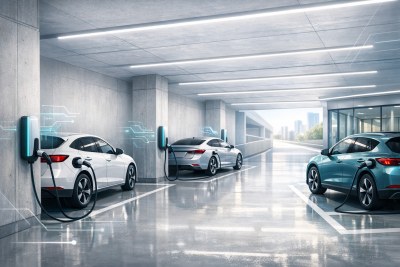
NSW strata charger reforms could reshape apartment EV budgeting

New rights are planned for 2027, but installation costs and building readiness will still matter

NSW strata charger reforms could reshape apartment EV budgeting?w=400

The information on this website is general in nature and does not take into account your objectives, financial situation, or needs. Consider seeking personal advice from a licensed adviser before acting on any information.

NSW has moved closer to making apartment EV charging a practical part of vehicle ownership, with the Strata Schemes Legislation Amendment (Miscellaneous) Act 2026 assented on 23 October and government guidance indicating further reforms planned to start in 2027.
For electric vehicle buyers in strata buildings, the change is not just a property-law update; it could affect how households think about finance, charging access and the real cost of switching from petrol to electric.

The key EV measure is aimed at establishing a right for lot owners to install electric vehicle charging infrastructure on their own lot. In practical terms, that should make it harder for strata committees to take a blanket “no EV chargers” position once the relevant provisions commence. However, it does not mean every charger proposal will automatically proceed without conditions. Buildings still need to manage electrical capacity, common property works, safety, billing and cost recovery.

That distinction matters for finance planning. A buyer comparing EVs may focus on the vehicle price, interest rate and loan term, but home charging can be a major part of the ownership equation. In a freestanding home, the question may be whether the switchboard and parking location suit a charger. In an apartment building, the question can extend to strata approval, an energy assessment, shared infrastructure, metering, load management and possible capital works contributions.

For households preparing an EV budget, the reform may make the path clearer but not necessarily cheaper. NSW guidance on EV-ready strata buildings outlines several models, from individual installations through to modular or whole-of-building approaches. Some costs may sit with the owner installing the charger, while other infrastructure costs may be handled through the owners corporation and recovered over time. That means prospective buyers should consider charger access alongside registration, insurance, servicing, electricity tariffs and depreciation as part of the broader total cost of ownership.

The timing also deserves attention. The Act has received assent, but the NSW Government says the EV charging right is among changes planned to start in 2027. Until commencement details and regulations are settled, owners and tenants should avoid assuming the new process is already fully available. Tenants will generally still need to work through their landlord, while owners will need to engage with the strata committee or strata manager.

For EV finance shoppers, the wider lesson is that vehicle affordability and charging practicality are connected. Before committing to a model, it can be useful to compare likely repayments, upfront charging expenses and ongoing electricity arrangements using general repayment scenarios. The NSW reform may reduce one long-running barrier for apartment residents, but careful budgeting remains essential because strata buildings vary widely in readiness, layout and upgrade costs.

Published:Wednesday, 28th Oct 2026
Author: Paige Estritori

Please Note: We do not endorse any specific products or companies. Some content is sourced from third parties, including press releases, and may not be independently verified for accuracy or completeness.

Share this news item:

Rate this article

0 Comments

No comments yet. Be the first to share your thoughts.

Finance News

NSW strata charger reforms could reshape apartment EV budgeting
28 Oct 2026: Paige Estritori
NSW has moved closer to making apartment EV charging a practical part of vehicle ownership, with the Strata Schemes Legislation Amendment (Miscellaneous) Act 2026 assented on 23 October and government guidance indicating further reforms planned to start in 2027. For electric vehicle buyers in strata buildings, the change is not just a property-law update; it could affect how households think about finance, charging access and the real cost of switching from petrol to electric. - read more
Broker Review Puts Loan Recommendations Under Fresh Scrutiny
28 Oct 2026: Paige Estritori
ASIC’s latest review of mortgage broker conduct has put a spotlight on how loan recommendations are explained, documented and challenged when a cheaper option is available. Although the review focused on home loan brokers, the practical lesson is broader: borrowers should understand not only the advertised rate, but also why a particular loan structure, lender or feature is being presented as suitable. - read more
Charging Access Becomes a Bigger Part of Electric Truck Funding
28 Oct 2026: Paige Estritori
Australia’s electric truck conversation has shifted from vehicle availability alone to the practical question of where, when and how commercial vehicles will charge. Ampol’s October 2026 activity has made that shift clearer, with the company announcing a proposed acquisition of Evie Networks and a separate memorandum of understanding with Foton Mobility Distribution to explore charging solutions for electric commercial vehicles. - read more
ASIC Review Highlights the Need to Question Costlier Loan Recommendations
28 Oct 2026: Paige Estritori
ASIC’s 13 October 2026 review of major mortgage broker groups has delivered a timely reminder for borrowers: a loan recommendation should be understandable, evidence-based and clearly connected to the customer’s needs. The regulator found that broker practices generally aligned with its guidance, but also identified gaps in how some higher-cost loan recommendations, supervision processes and complaints were handled. - read more
Off-Road Boom Changes the Motorcycle Budget Conversation
28 Oct 2026: Paige Estritori
Australia’s motorcycle market is ahead of last year after the first nine months of 2026, but the latest FCAI-audited figures point to a recovery driven mainly by off-road demand rather than a uniform lift across every type of bike. For riders thinking about motorbike finance, that distinction matters because the practical costs attached to a trail bike, junior motorcycle, scooter or road machine can look very different once purchase price, transport, gear, insurance and maintenance are considered together. - read more


Truck Loan Articles

Commercial Vehicle Loans in Australia: Options, Costs and Application Steps
Commercial vehicle finance can help Australian businesses acquire trucks, vans and other work vehicles without paying the full purchase price upfront. This guide explains the main loan and lease options, what affects costs, what lenders may review, and how to compare finance terms before applying. - read more
Maximizing Your Investment: Strategies for Enhancing Truck Resale Value in Australia
The commercial vehicle market in Australia is a cornerstone of the transportation and logistics industries, with trucks playing an indispensable role. Whether for long-haul deliveries across the vast distances of the continent or for urban distribution, trucks are critical assets for businesses and entrepreneurs alike. This significance makes it essential for commercial vehicle buyers to understand the dynamics of truck resale values in Australia. - read more
Finance checks before buying a used truck in Australia
Buying a used truck can be a practical way to expand or start a transport operation, but finance-related checks are essential before you commit. This guide explains PPSR searches, outstanding finance, private sale documents, lender valuation requirements, insurance and settlement steps for Australian buyers. - read more
Essential Checklist for Commercial Vehicle Loan Approval
In the journey to secure a commercial vehicle loan, preparation is key. Just as a vehicle needs to be in perfect condition to hit the road, your loan application requires meticulous attention to detail to ensure a green light from lenders. This article embarks on the essential journey of understanding the critical checkpoints before applying for a commercial vehicle loan. We navigate through the path of prerequisites that pave the way for a seamless approval process. - read more
The Pros and Cons of Leasing vs. Buying a Truck for Your Business
Small businesses that require regular transportation of goods may find it essential to purchase a truck. However, this acquisition can become a significant investment that requires careful consideration before making a decision. The two options available are buying or leasing a truck. In this article, we will explore the pros and cons of each option to help you make an informed choice. - read more


Knowledgebase
Adjustable-Rate Mortgage (ARM) Cap:
A limit on how much the interest rate or the payment can change for an Adjustable-Rate Mortgage.