
Truck Loans Australia :: Articles

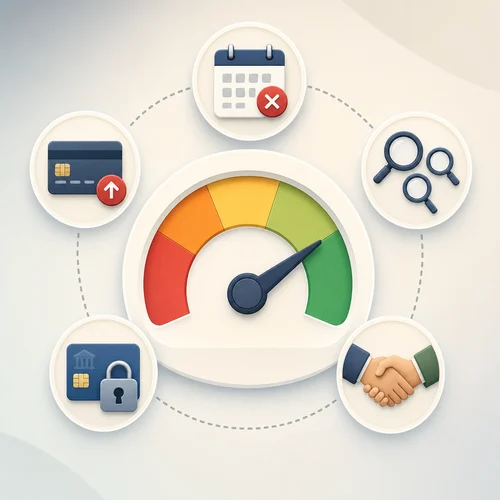
5 Credit Killers

What are the top factors that can damage your credit score?

5 Credit Killers

The information on this website is general in nature and does not take into account your objectives, financial situation, or needs. Consider seeking personal advice from a licensed adviser before acting on any information.

A good credit score speaks volumes about your financial habits. It's the evidence most creditors need to evaluate your credit worthiness.
Interestingly, there are some credit killers that even people maintaining good credit scores would unwittingly be a part of, which will be their undoing when applying for credit facilities in the future.
These mistakes may seem to be insignificant, but when the time comes, you may face more problems than you expect.

Avoiding Debt

Creditors need to evaluate your financial history to approve any credit facilities.
If you have no previous or existing debts, it might adversely affect your case, as creditors have no way of checking out how you'll handle the credit you get from them.

Shopping For Rates

Looking around for the best rate may actually turn out to be bad.
Debt Stressed?
Image for Debt Stressed?If you're struggling to pay your debts and covering living expenses, we're here to help. Through our national panel of Debt Management specialists, we can help customers with $10k or more in debt by consolidating your existing loans, stopping Debt collectors from contacting you and re-negotiating repayments on your terms!
Too many inquiries within a short period could damage your credit score.
Usually, if you do more than 3 or 4 inquiries within a single month, you are likely to scare the lenders. For the same reasons, transferring the balances on your credit cards could be a bad idea as well.

Assuming There's a Grace Period

If you are late on a payment by even one day, you are late, period.
Never assume there's a grace period for late payments, because it only affects your credit score negatively.

Closing Old Accounts

Because your relevant transaction history also gets erased when you close your old accounts, your credit history is shortened and it may lower your credit score.
If you want to close your old accounts, close everything except the oldest account, which will leave a longer history.

Co-signing Loans

The obvious problem here is that the primary borrower's mistakes will end up on your credit report as well.

Published: Sunday, 1st Aug 2021
Author: Paige Estritori


Truck Loans Articles

The Most Important Factors to Consider When Buying a Truck
Buying a truck is a major investment, whether it's for personal use or business purposes. With the plethora of options available in the Australian market, it's important to consider various factors before making a purchase. Your specific needs, budget, lifestyle, and work requirements should be taken into account before making a decision to ensure the truck you buy fits your needs. - read more
How to Get a Truck Loan with Less-Than-Perfect Credit
Securing finance for any significant purchase can be a challenge, especially when it comes to acquiring a truck for business purposes. Coupled with a less-than-perfect credit score, this task can seem daunting for many Australians. The ripple effects of financial constraints can impede business operations, affecting the lifeline of commercial ventures that rely on transportation. - read more
Interest Rates, Terms, and Fees: What to Look for in Commercial Vehicle Loans
Choosing the right commercial vehicle loan is a pivotal decision for any business aspiring to expand its transportation capabilities. For many, commercial vehicles are integral to daily operations, and securing the best financial arrangement to acquire these assets can significantly impact the bottom line. - read more
Essential Financial Safety Nets for Aussie Truck Drivers
Welcome to the road less traveled, where the rubber meets financial prudence. Truck driving in Australia is not just about long miles but also about ensuring financial stability amidst life's crossroads. As a truck driver, taking the wheel of your financial future is crucial, and that's what we'll navigate in this article. - read more
How to Choose the Right Lender for Your Commercial Truck Loan
For many Australian businesses, purchasing a commercial vehicle is a significant investment that often requires financial assistance. Understanding the intricacies of truck financing is crucial, as the right loan can affect your company's bottom line and operational efficiency. With a plethora of lenders offering myriad loan products, choosing the most advantageous deal can be daunting. - read more

Finance News

Australian Home Prices Set to Climb: What Buyers and Investors Should Expect
30 Nov 2025: Paige Estritori
Recent analyses indicate that Australian home prices are expected to rise by approximately 6.9% in 2026, an upward revision from earlier projections of 5.6%. This forecast is based on a Reuters poll of 15 property analysts conducted between November 13 and 26, 2025. The anticipated increase is primarily attributed to a combination of limited housing supply and sustained demand, particularly in major cities such as Sydney, Melbourne, Brisbane, Adelaide, and Perth. - read more
RBA's Decision to Hold Cash Rate: Implications for Borrowers and Investors
30 Nov 2025: Paige Estritori
In its November 2025 meeting, the Reserve Bank of Australia (RBA) decided to keep the official cash rate unchanged at 3.60%. This decision reflects the central bank's cautious approach in balancing inflation control with economic stability. - read more
APRA's New Cap on High DTI Home Loans: What Borrowers Need to Know
30 Nov 2025: Paige Estritori
The Australian Prudential Regulation Authority (APRA) has announced a significant policy change aimed at mitigating risks in the housing market. Effective February 2026, APRA will implement a cap restricting banks from issuing more than 20% of new home loans to borrowers with debt-to-income (DTI) ratios of six times or higher. This measure applies to both owner-occupier and investor loans, excluding new housing developments. - read more
APRA's New Debt-to-Income Cap: What Homebuyers Need to Know
30 Nov 2025: Paige Estritori
The Australian Prudential Regulation Authority (APRA) has announced a significant policy change aimed at mitigating risks in the housing market. Effective February 2026, APRA will implement a cap on high debt-to-income (DTI) home loans, limiting banks to issuing no more than 20% of new home loans with DTI ratios of six times or higher. This measure applies to both owner-occupier and investor loans, excluding new housing developments. - read more
NAB's Interest Rate Reduction: A Boost for Australian Businesses
30 Nov 2025: Paige Estritori
In response to the Reserve Bank of Australia's (RBA) recent decision to lower the official cash rate by 0.25%, National Australia Bank (NAB) has announced a corresponding reduction in interest rates for eligible business lending products. Effective from 30 May 2025, new and existing business customers with variable rate NAB Business Options Loans or NAB Business Overdraft products will see their interest rates decrease by 0.25% per annum. - read more

Start Here

Get a free truck loan eligibility assessment and compare truck finance and leasing options without accessing your credit file!!
Loan Amount:
Postcode:

All quotes are provided free and without obligation by a Specialist from our National Broker referral panel. See our Privacy Statement for more details.


Knowledgebase
Loan-to-Value Ratio (LTV):
A ratio that compares the value of the loan to the market value of the property securing the loan.